
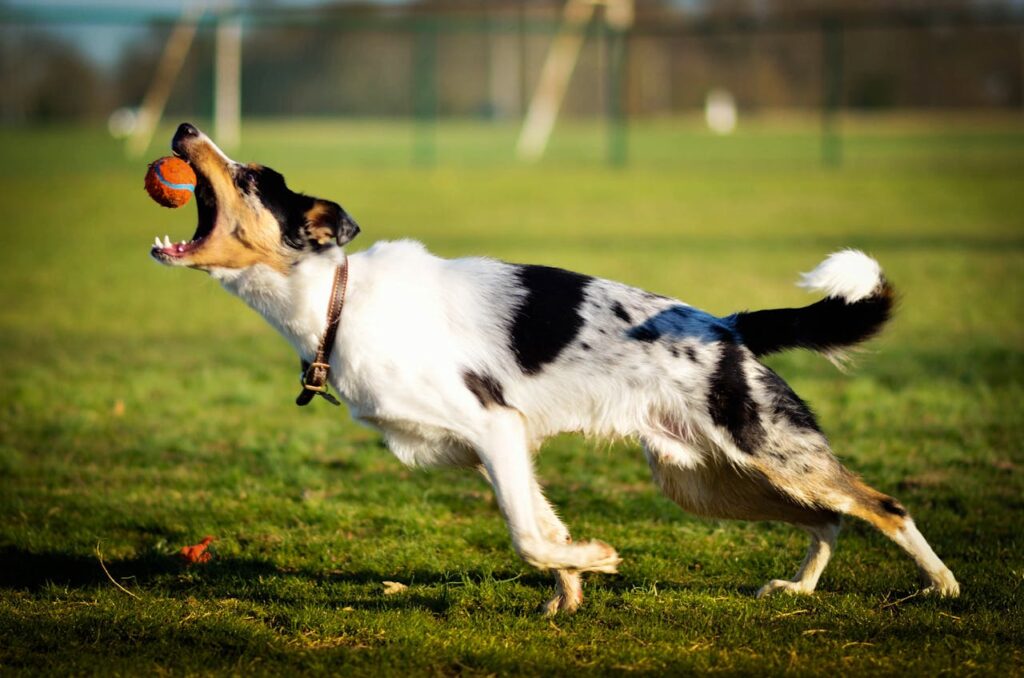
I think we all know that hyperactive Border Collie in the park – chasing one launched ball after another, pupils the size of dinner plates, with nothing else on their mind except the hunt.
Ball chasing is one of the most common games we play with our dogs. It’s fun, engaging and a great way to burn excess energy. But from a rehabilitation and behaviour perspective, it is not always as harmless as it seems.
What is the Issue from a Rehabilitation Standpoint?
Many injuries are linked to repetitive, high-impact activities like ball chasing. Dogs sprinting after balls face a lot of physical risk, caused by rapid acceleration, slamming on the brakes and twists or pivots mid-run or jump.
These movements place significant strain on joints, especially shoulders, elbows and stifles, as well as ligaments, muscles and tendons.
Over time, or even in a single moment, this can lead to injury. It could be a torn cruciate ligament, joint wear and tear, leading to early onset arthritis, or even a spinal injury, like an FCE (Fibrocartilaginous Embolism), which can have life-changing consequences.
On top of this, high prey drive often pushes dogs to overexert themselves. As fatigue sets in, coordination decreases and movement becomes less controlled—further increasing the risk of injury. If you ever had a good leg session at the gym and then tried to walk down the stairs, you will know what I mean!
Overexertion in warm weather can also increase the risk of heatstroke, which is another important factor to consider.
What About Behaviour?
Ball chasing doesn’t just affect the body—it also affects the brain.
The behaviour is driven by a powerful cocktail of neurochemicals, including dopamine, adrenaline, and cortisol. This combination can lead to obsessive or addictive patterns, where the dog begins to prioritise the ball over everything else.
- Dopamine: Released in anticipation of the chase, creating feelings of euphoria, motivation and drive. It makes the activity self-rewarding and highly addictive, driving the dog to seek repetition.
- Adrenaline: This hormone spikes during the chase and activates the sympathetic nervous system (SNS), which is responsible for the “fight/flight” response. Activation of the SNS leads to an increase in heart rate, blood pressure, and arousal levels, as well as slowing digestive function.
- Cortisol: The stress hormone. Once elevated, it can remain in the system for an extended period, contributing to chronic stress and anxiety.
Rather than creating a calm, tired dog, excessive ball chasing can actually result in a dog that is more wired, restless, and unable to relax.
“But My Dog Loves the Ball!” – What Are the Alternatives?
Don’t worry, I am not going to tell you to completely eliminate ball play. I know my own dog too well for that… Vasiliy is also a bit of a ball junkie!
Instead, let’s look at ways to make it safer and more balanced:
Controlled Retrieves: Reduce sharp turns and sudden stops while building impulse control.
- Ask your dog to sit and stay beside you
- Throw the ball a short distance (2-3 metres)
- Release them calmy to retrieve
You can also mix it up by occasionally retrieving the ball yourself, rather than always sending your dog. This will further improve your dog’s impulse control.
Structured Breaks: Build in pauses between throws and include calming, engaging activities.
Try mixing in:
- Trick training (e.g. “High Five,” “Touch,” “Play Dead”)
- Basic obedience cues
- Focus exercises like balance work
This helps create both physical and mental fatigue.
Water Retrieves: If your dog enjoys water, this is a great low-impact option.
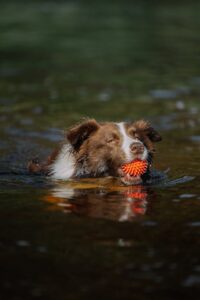
Throwing the ball into water:
- Reduces impact on joints
- Eliminates sharp braking and pivoting
- Adds the benefits of swimming
Perfect for beach days or river outings with your water-loving dog.
Find an alternative: There are so many great options beyond repetitive ball throwing:
- Scent work – hide the ball and let your dog search for it
- Tug-of-war – played safely at head height or lower, with clear rules
- Bush walks or hikes
- Rehabilitation exercises like sit-to-stand, cavaletti, or balance work
- Swimming sessions
These activities promote strength, coordination, and body awareness—without the same injury risk.
Final Thoughts
I’m not here to be the “ball police” and say that all ball chasing is bad. Like most things, it comes down to moderation and awareness.
If your dog is recovering from injury, has a history of issues, or is showing subtle signs like stiffness, slowing down, or reluctance to move, it may be time to rethink high-impact games.
Hopefully this blog has given you some food for thought, along with practical ways to make playtime safer and more beneficial for your dog.
At High Five Paws, it’s all about helping dogs move better, build strength, and continue doing what they love—safely.
Dog Rehabilitation in Spearwood, Perth
High Five Paws is a small, hands-on canine rehabilitation service based in Spearwood, Western Australia, providing exercise-based rehabilitation for dogs recovering from:
- Orthopaedic surgery
- Neurological conditions such as IVDD
- Injury or mobility issues
- Age-related weakness
If your dog may benefit from dog rehabilitation or therapeutic exercise, feel free to get in touch.
Together, we can help restore balance and renew vitality. 🐾
